Launch offer — valid today only

📄 Digital book in PDF · read it on your phone or print it

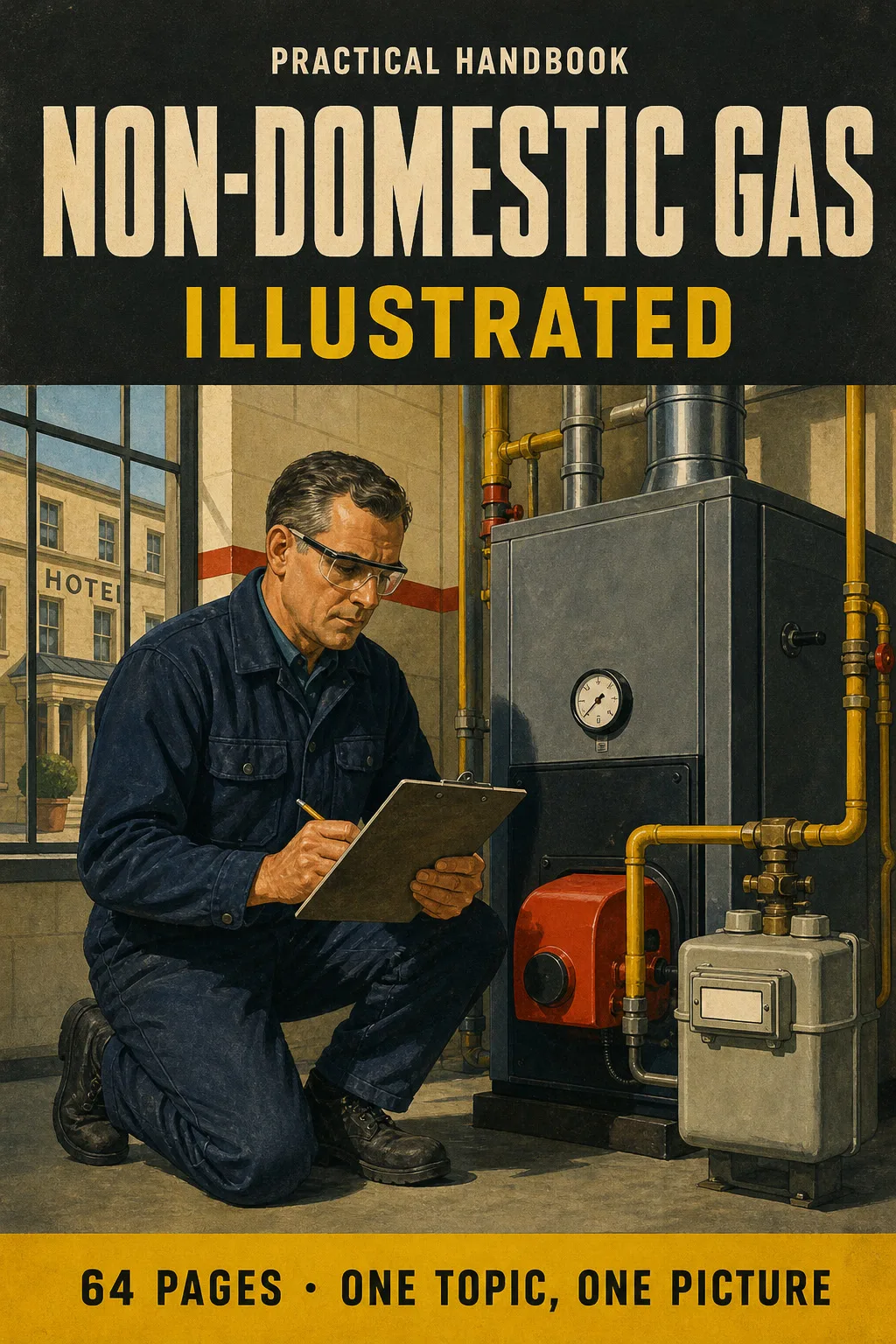
Non-Domestic Gas Work to I.S. 820 in Drawings Size It, Test It, Commission It: One Drawn Page per Check

Service entry, regulators, pipe sizing, plant room ventilation, commercial kitchens, interlocks, tightness testing, purging and commissioning. Each topic has its own page: the drawing first, then what you need to remember. 64 illustrated pages.

SHOW ME THE 64 PAGES

🔒 Secure checkout · PDF by email · 30-day guarantee

Every topic, its own pageEach check drawn, with the explanation alongside
64 illustrated pages8 parts, from where domestic ends to exam-style practice
Up-to-date sourcesI.S. 820 (current edition) and the current Registered Gas Installer scheme requirements
PDF by emailFormat

Look Inside the Book

Every page has one big drawing and a box with the numbers and steps you need to know:

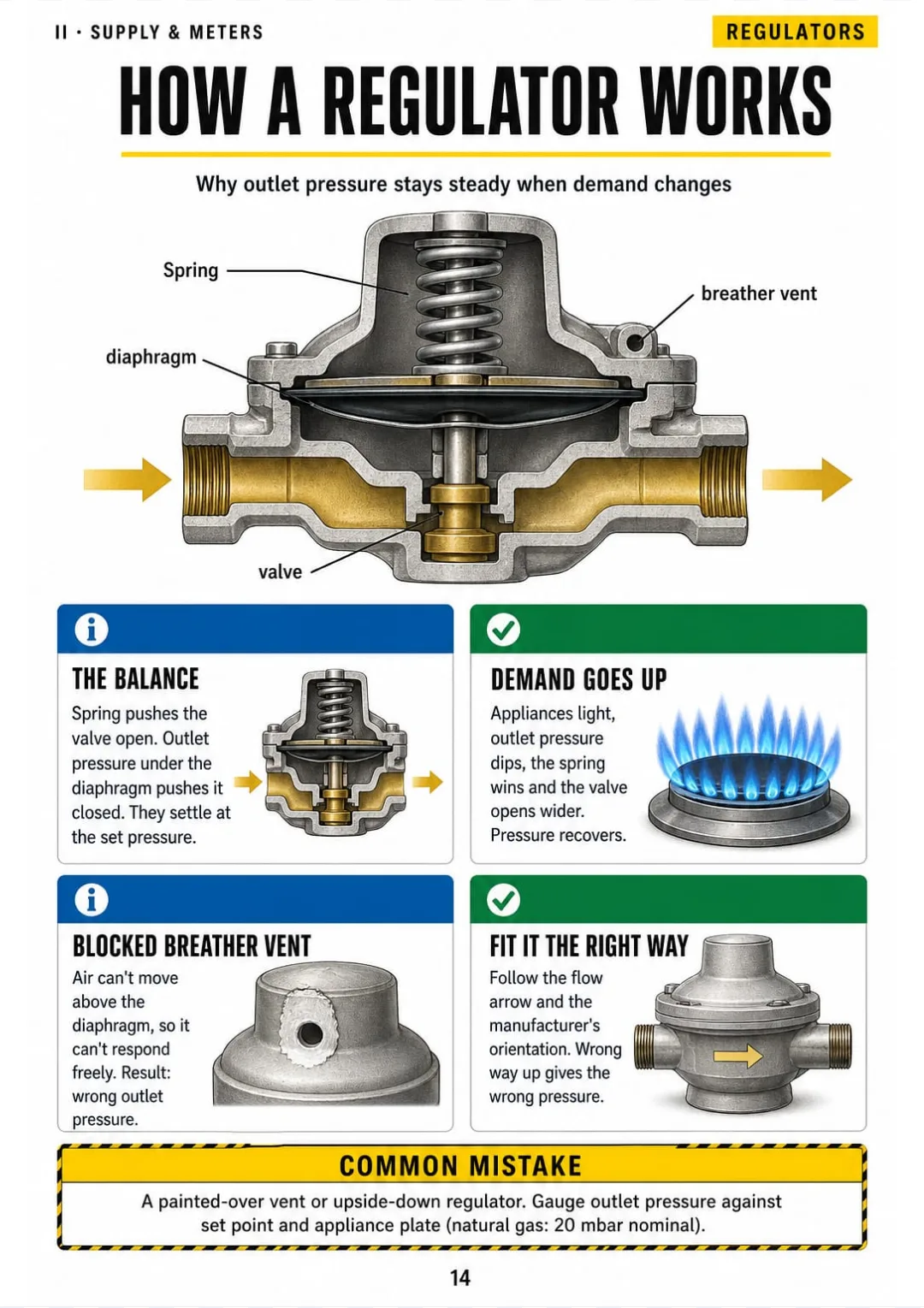
Spring, diaphragm, valve, breather vent: blocked vent or wrong orientation means wrong pressure.
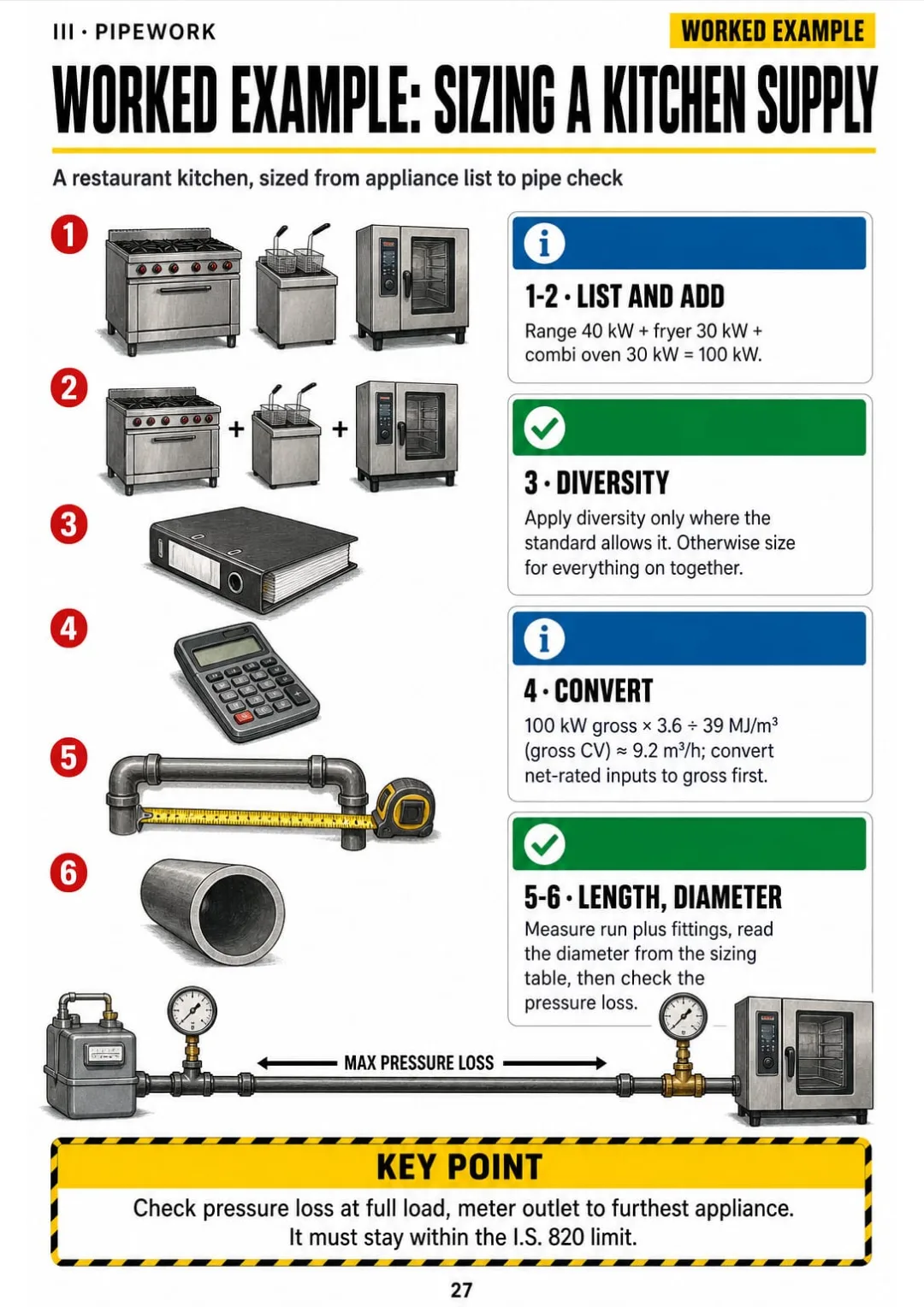
Restaurant kitchen example: 100 kW becomes 9.2 m³/h and a checked pipe size
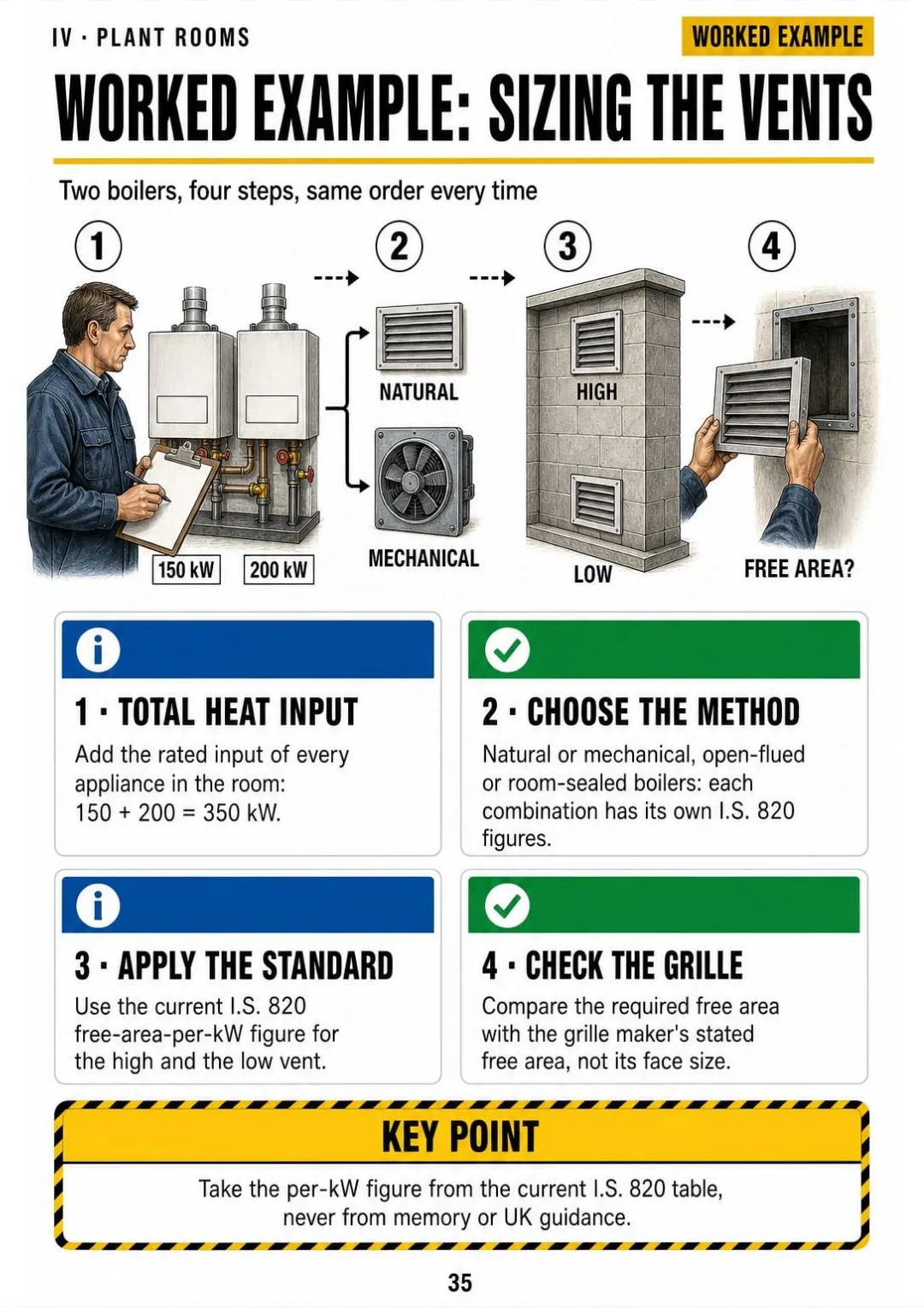
350 kW total, method chosen, I.S. 820 figure applied, grille free area checked.
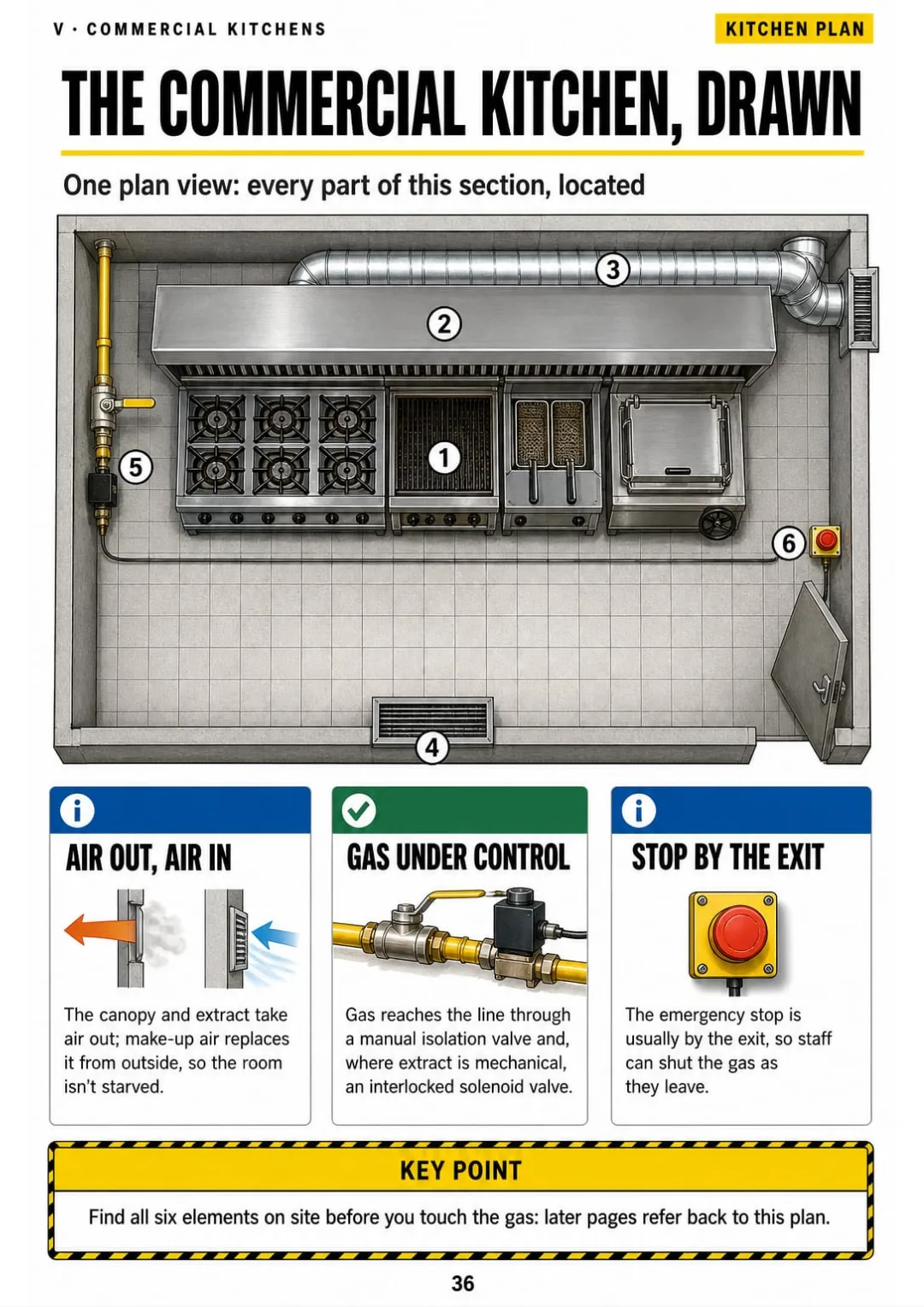
Six numbered elements of a commercial kitchen on one plan: line, canopy, extract, make-up air, gas valve, stop.
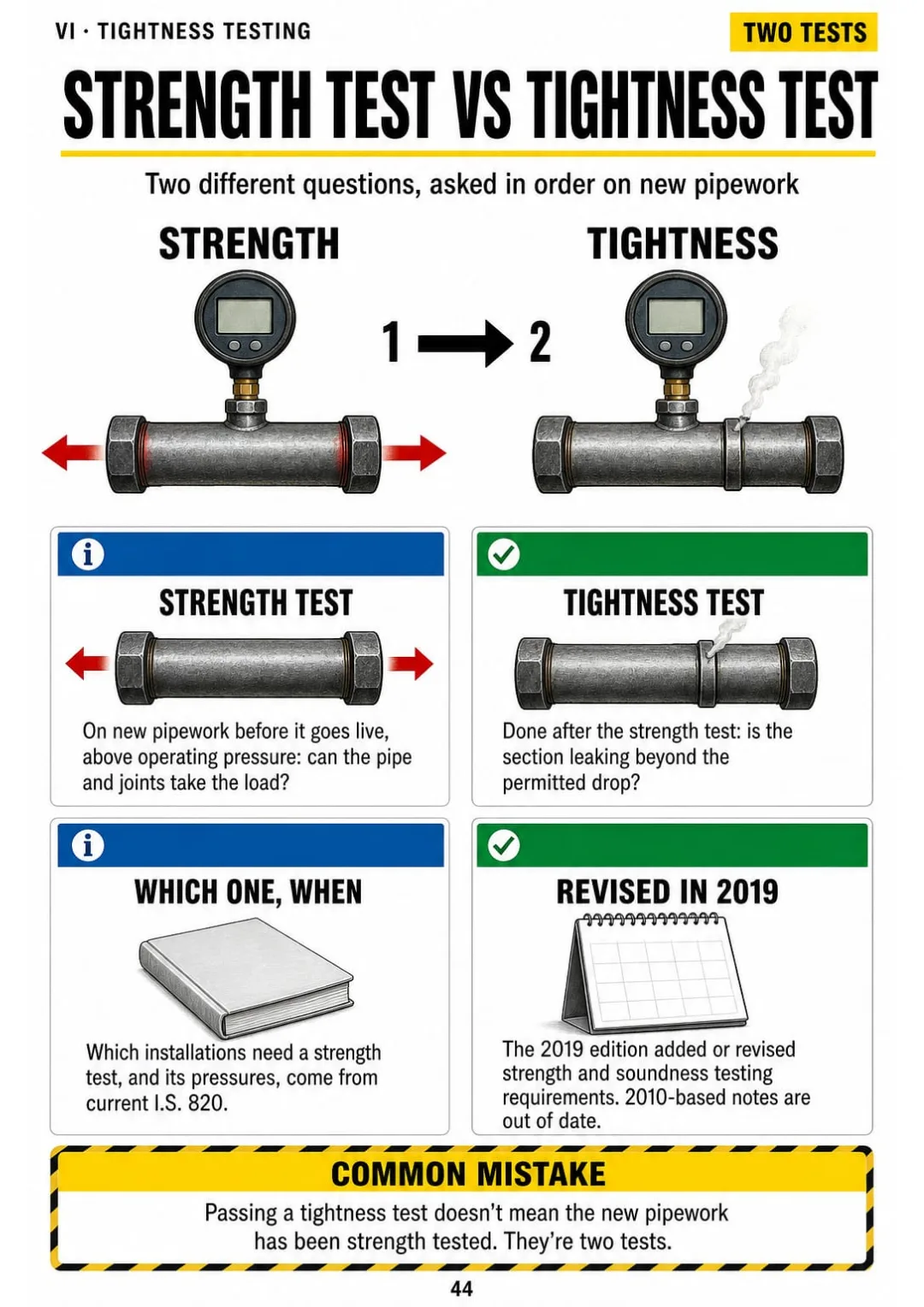
Strength test: can it take the load? Tightness test: is it leaking?
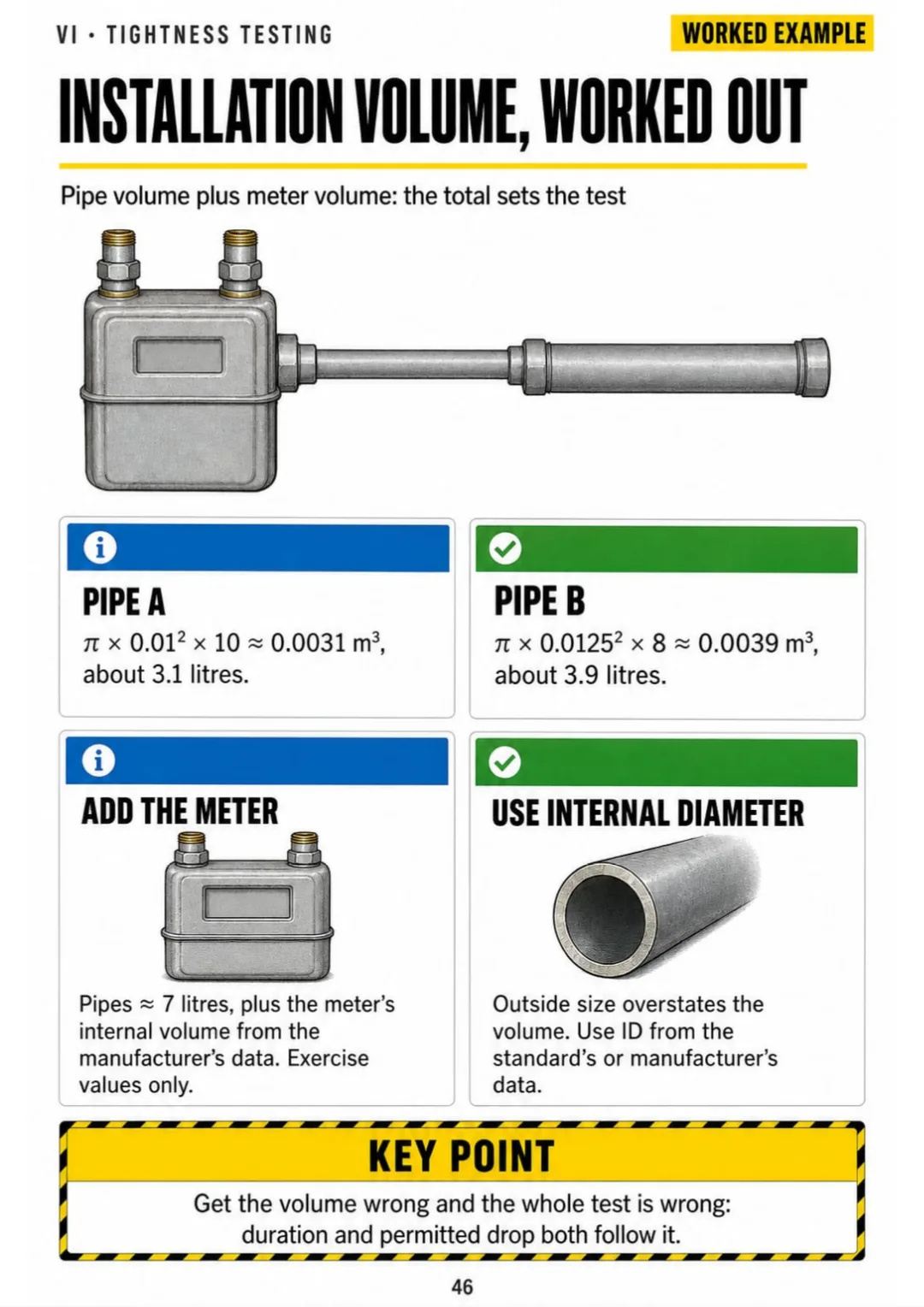
Installation volume = pipe volume (by ID and length) + meter volume
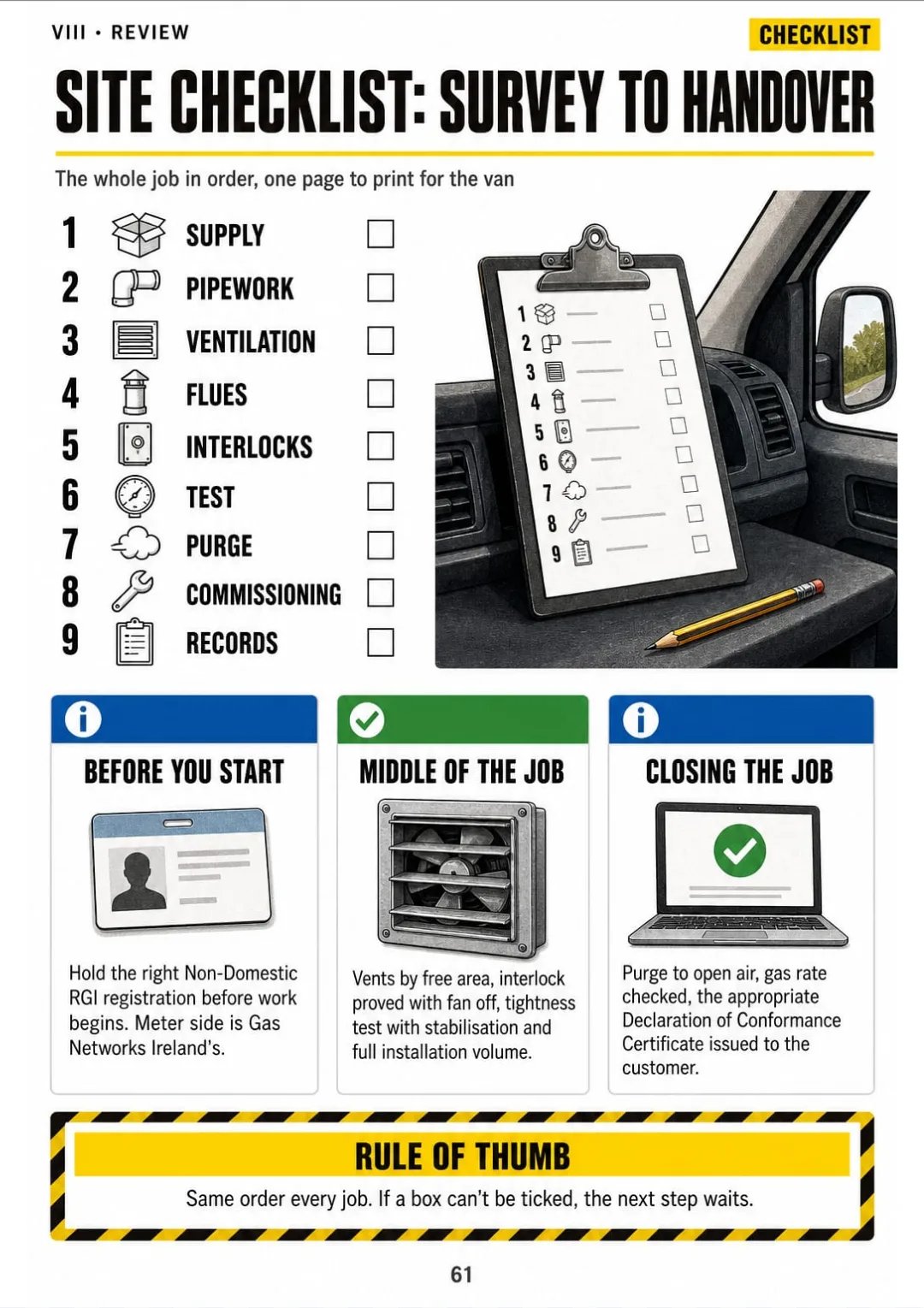
Supply, pipework, ventilation, flues, interlocks, test, purge, commissioning, records: 9 boxes.
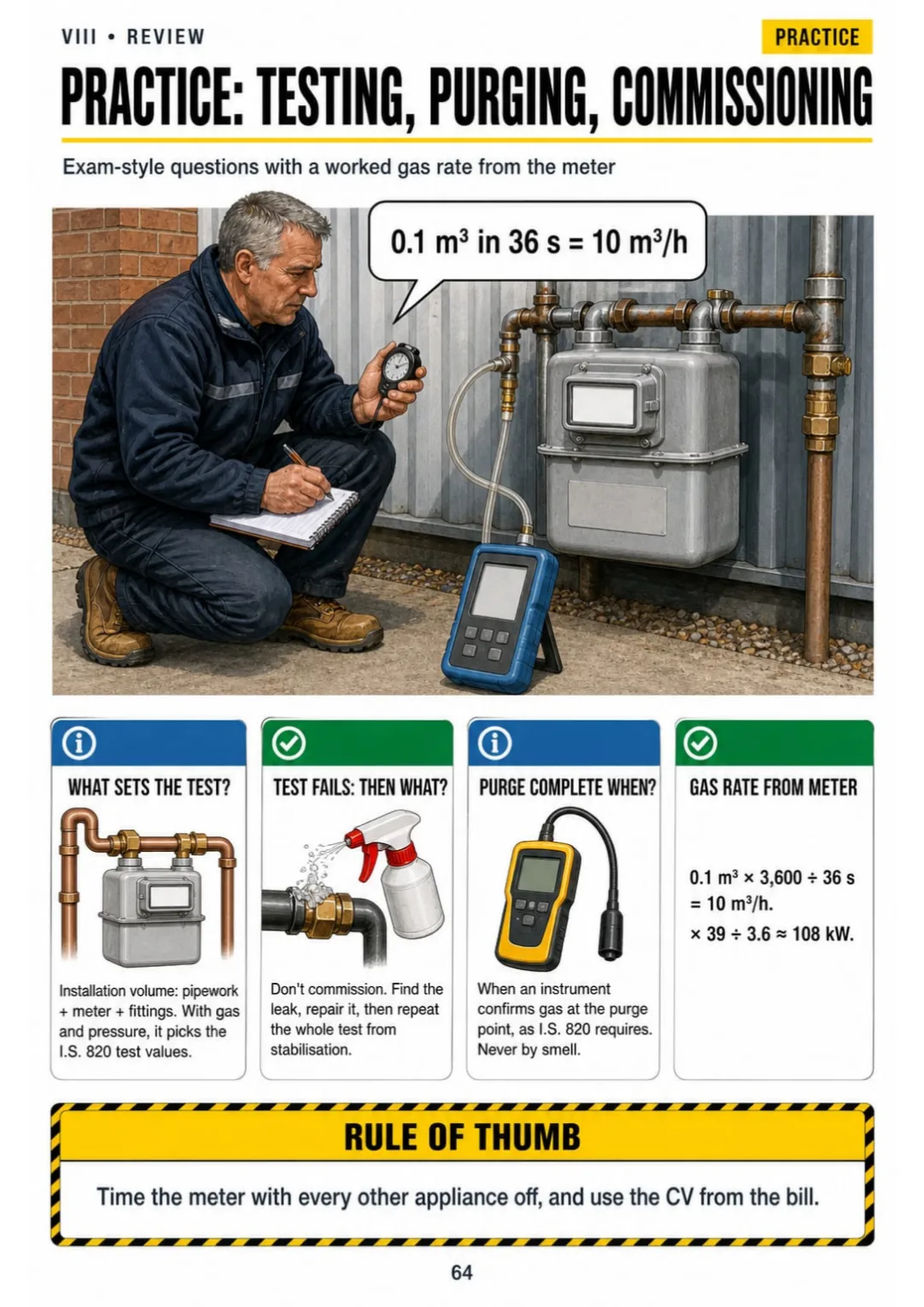
0.1 m³ in 36 seconds = 10 m³/h ≈ 108 kW: worked out at the meter.

Swipe to see more →

These are real pages from the book. The table of contents is the full one: 8 parts and 60 topics.

The Problem Isn't You. It's How It Was Explained to You.

You're standing in a school plant room with 350 kW of boilers and you have to say whether the vents are big enough.

You read that section of the standard last week. But it was paragraphs and a table, and on site none of it comes back in order.

350 kW total, method chosen, I.S. 820 figure applied, grille free area checked.

In the book, that job is one page: the plant room drawn, 350 kW totalled, the method chosen, the I.S. 820 figure applied and the grille free area checked against it.

The regulator, the restaurant kitchen supply, the interlock, the tightness test and purging work the same way: each one has its own page.

You see it, you follow it, and you know which figure to check in the standard, and why.

COMPARE FOR YOURSELF

The Same Topic, Two Ways to Study It

THIS
  • The manual: line after line
  • Pipe sizing explained only in words
  • You go into the assessment unsure
Where a supply is to be provided to a commercial catering area, the installer shall first establish the aggregate heat input of all connected appliances, expressed in kilowatts, and shall convert this to a volumetric gas rate by reference to the calorific value of the gas supplied. Having regard to the length of the installation pipework, the number and type of fittings and the permissible pressure loss between the meter outlet and the appliance inlet, an appropriate nominal bore shall then be selected and verified, account being taken of any foreseeable additional load.
FOR THIS
  • 100 kW → 9.2 m³/h, worked on the page
  • kW × 3.6 ÷ CV, in one box
  • The run from the meter drawn, pipe size checked
Restaurant kitchen example: 100 kW becomes 9.2 m³/h and a checked pipe size
CONTENTS

Take a Look at the 8 Parts and 60 Topics

From domestic to non-domestic, supply and meters, pipework and sizing, plant rooms, commercial kitchens, tightness testing, purging and commissioning, and a review with exam-style practice: 64 pages, all illustrated.

IFrom Domestic to Non-Domestic · pp. 5-10
  1. Where domestic ends and non-domestic begins
  2. What changes when you go commercial
  3. Who's who on a non-domestic job
  4. Natural gas and LPG: two gases, two behaviours
  5. Pressure tiers in plain words
  6. The order of the job, from supply to handover
IISupply, Meters and Regulators · pp. 11-18
  1. The service entry, drawn
  2. The emergency control valve: position and access
  3. Meter installations: what you can and can't touch
  4. How a regulator works
  5. Safety devices on the meter installation
  6. Meter housings and meter rooms
  7. Labels and notices at the meter
  8. Equipotential bonding near the meter
IIIPipework: Materials, Routes and Sizing · pp. 19-27
  1. Choosing the pipe material
  2. Joints: screwed, welded, pressed, brazed
  3. Routing pipework through a building
  4. Sleeves through walls and floors
  5. Supports, clips and spacing
  6. Isolation valves: where they go
  7. How pipe sizing works
  8. From kW to m³/h: the gas rate
  9. Worked example: sizing a kitchen supply
IVPlant Rooms: Ventilation and Flues · pp. 28-35
  1. Why a plant room needs air
  2. Natural ventilation: high and low
  3. Mechanical ventilation and the flow-proving rule
  4. Flue types for commercial appliances
  5. Flue terminals and discharge points
  6. Plant room access, signs and safety
  7. Gas detection and automatic isolation
  8. Worked example: plant room vent sizing
VCommercial Kitchens · pp. 36-42
  1. The commercial kitchen, drawn
  2. Canopy and extract: what they do
  3. Make-up air: the forgotten half
  4. The ventilation–gas interlock
  5. Proving the interlock: how to test it
  6. Flexible connections on catering equipment
  7. Flame supervision on catering appliances
VITightness Testing · pp. 43-49
  1. What a tightness test proves (and what it doesn't)
  2. Strength test versus tightness test
  3. The equipment: gauges, test points, test medium
  4. Installation volume: the number that sets the test
  5. The tightness test, step by step
  6. Temperature and other false readings
  7. When the test fails: finding the leak
VIIPurging and Commissioning · pp. 50-57
  1. Why purge, and the two directions
  2. Purge volume and planning
  3. Safe purge points and venting
  4. Testing the purge is complete
  5. Commissioning an appliance: the order
  6. Measuring the gas rate at the meter
  7. Combustion analysis and spillage checks
  8. Handover and records
VIIIReview: Mistakes, Checklists and Exam Practice · pp. 58-64
  1. Mistakes in supply and pipework, before and after
  2. Mistakes in ventilation and kitchens, before and after
  3. Mistakes in testing and commissioning, before and after
  4. Site checklist: survey to handover
  5. The key numbers on one page
  6. Exam-style questions: supply, pipework and ventilation
  7. Exam-style questions: testing, purging and commissioning

One Page, One Topic, All Clear

Think of it this way:

You're on a restaurant fit-out. The chef wants a new range and the main contractor asks you whether the existing supply will carry it.

You open the book at the kitchen supply page and see it drawn: 100 kW turned into 9.2 m³/h, the run from the meter, and the pipe size checked.

Strength test: can it take the load? Tightness test: is it leaking?

The same goes for the regulator, the plant room vents, the interlock, the tightness test and purging: each one on its own page.

Non-Domestic Gas Illustrated is 8 parts and 60 topics, all drawn, with mistakes shown before and after, a site checklist and exam-style questions at the end.

What you see drawn, you don't have to memorize.

What's Inside Non-Domestic Gas Illustrated:

Ipp. 5-10

From Domestic to Non-Domestic

Where domestic ends, what changes on commercial jobs, who's who on site, natural gas and LPG, pressure tiers and the order of the job.

IIpp. 11-18

Supply, Meters and Regulators

The service entry, the emergency control valve, meter installations, how a regulator works, safety devices, meter housings, labels and bonding.

IIIpp. 19-27

Pipework: Materials, Routes and Sizing

Pipe materials, joints, routes, sleeves, supports, isolation valves, how sizing works, kW to m³/h and a worked kitchen supply.

IVpp. 28-35

Plant Rooms: Ventilation and Flues

Why a plant room needs air, high and low vents, mechanical ventilation, flues and terminals, access, gas detection and a worked vent sizing.

Vpp. 36-42

Commercial Kitchens

The commercial kitchen drawn, canopy and extract, make-up air, the ventilation–gas interlock and how to prove it, flexible connections and flame supervision.

VIpp. 43-49

Tightness Testing

What a tightness test proves, strength versus tightness, the equipment, installation volume, the test step by step, false readings and finding the leak.

VIIpp. 50-57

Purging and Commissioning

Why and how to purge, purge volume, safe vent points, proving the purge, commissioning in order, gas rate at the meter, combustion checks and handover.

VIIIpp. 58-64

Review: Mistakes, Checklists and Exam Practice

Mistakes before and after, the site checklist from survey to handover, the key numbers on one page and exam-style questions with answers.

At the end of the book: Mistakes shown before and after, a 9-box site checklist, the key numbers on one page and exam-style questions with answers.
Plus: 2 Free Books

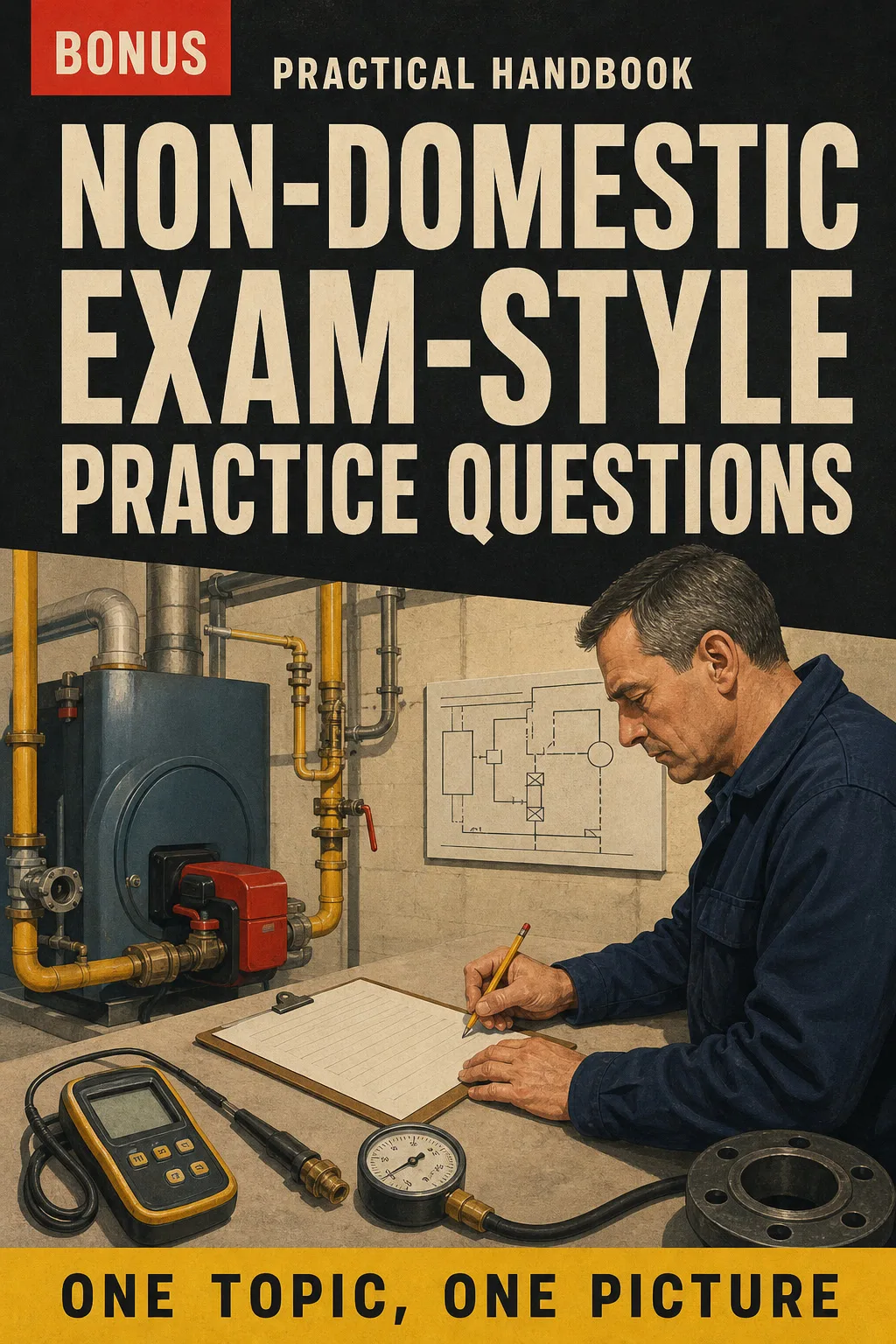
Non-Domestic Exam-Style Practice Questions

BONUS 1: «Non-Domestic Exam-Style Practice Questions»

Value on its own: US$ 17.90

Test yourself topic by topic with exam-style questions and clear answers, so you know what you've got and what to go back over.

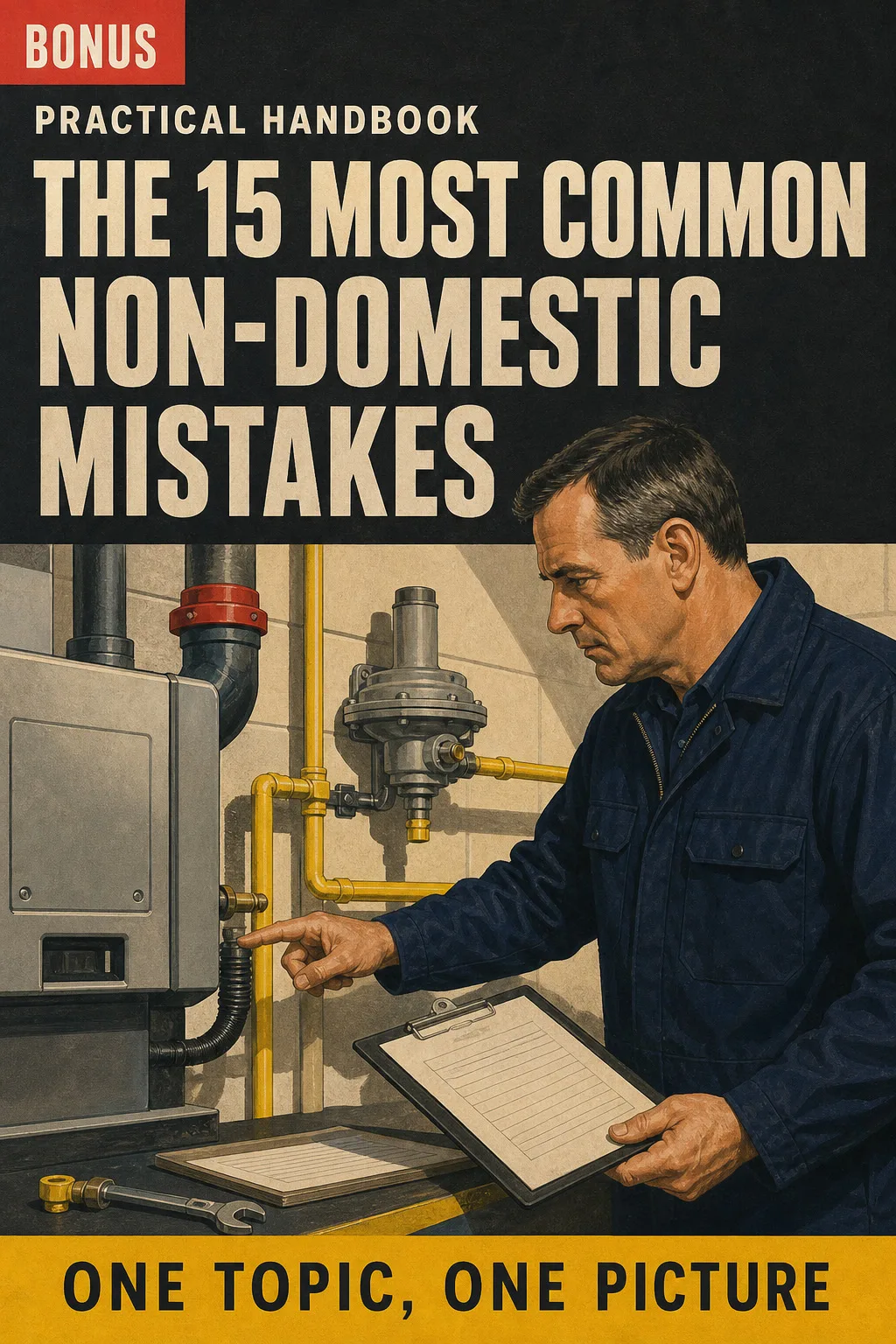
The 15 Most Common Non-Domestic Mistakes

BONUS 2: «The 15 Most Common Non-Domestic Mistakes»

Value on its own: US$ 14.90

Each frequent mistake drawn as before and after, so you spot it on site before the customer or the inspector does.

Non-Domestic Gas Illustrated with 2 Free Books

  • Non-Domestic Gas Illustrated: 64 illustrated pagesUS$ 63
  • BONUS 1: Non-Domestic Exam-Style Practice QuestionsUS$ 17.90
  • BONUS 2: The 15 Most Common Non-Domestic MistakesUS$ 14.90
  • High-resolution PDF to printIncluded
Total value US$ 95.80
YOUR PRICE:
US$ 27
You save US$ 68.80
YES, I WANT NON-DOMESTIC GAS ILLUSTRATED FOR US$ 27

📄 This is a digital PDF book sent to your email: nothing is printed or shipped.

Secure purchaseEncrypted payment30-day guarantee

PDF by email: We email you Non-Domestic Gas Illustrated as a PDF, together with the two free books. It's a single payment: no installments, no extra charges.

Who This Book Is For

You're preparing for non-domestic work

You're preparing for non-domestic work

Years of domestic jobs behind you and now commercial ahead: the book takes you through it in the order you'll work, supply to handover, one drawing per topic.

Your assessment is coming up

Your assessment is coming up

You go over it topic by topic, check yourself with the exam-style questions, and the key numbers sit on one page for the last look.

You already do commercial work

You already do commercial work

What you've done by ear for years, laid out page by page against I.S. 820. Print it and keep it in the van.

Everything You Get Today

US$ 95.80US$ 27
YES, I WANT NON-DOMESTIC GAS ILLUSTRATED FOR US$ 27

📄 This is a digital PDF book sent to your email: nothing is printed or shipped.

30DAYS
GUARANTEE

30-Day Guarantee

Try Non-Domestic Gas Illustrated for 30 days, bonus books included.

We refund everything if the file won't open, if the book isn't what you see here, if you were charged twice or if the email doesn't arrive. Just email us.

You pay once. No subscriptions.

Frequently Asked Questions

Is it for me if I'm a Registered Gas Installer moving from domestic to non-domestic work?

Yes. It's written for installers who already know domestic work and need the commercial side: bigger pipework, plant rooms, kitchens, interlocks, testing and commissioning. It doesn't go back over the basics of the trade.

Where does the content come from?

It's written for Ireland and checked against the current edition of I.S. 820 and the current requirements of the Registered Gas Installer scheme. The edition it was checked against is printed on the first page, and the test pressures and test times follow that edition. It's not UK material adapted. The worked examples use our own values, and we don't reproduce the text or tables of the standard.

Is it official material?

No. It's an independent study guide. It is not affiliated with or endorsed by NSAI, CRU, RGII or any awarding body.

Does it replace the course or the assessment training?

No. It's a book to study and go over the topics. It doesn't give you a certificate or count towards registration, and it doesn't replace the required training, the assessment or the standard itself.

Are the practice questions the ones in the assessment?

No. They're exam-style questions written for this book, with answers, so you can test yourself topic by topic.

When and how does it arrive?

In PDF by email, to the address you enter at checkout. The two bonus books come the same way.

Do I have to pay every month?

No. It's a one-off payment. No subscription.

Can I have it on paper?

Yes. The PDF is ready to print, so you can keep it in the van or on the desk.

How does the refund work?

You have 30 days. We refund everything if the file won't open, if the book isn't what you see on this page, if you were charged twice or if the email doesn't arrive: just email us.

Before You Close This Page

No more rereading the standard with nothing sticking.

Plant room vents: you see them drawn once, and it sticks.

You go into the assessment knowing where everything is.

Drawings make studying faster.

The book is right below.

One-time payment: US$ 27 · Guarantee: 30 days · PDF by email

YES, I WANT NON-DOMESTIC GAS ILLUSTRATED FOR US$ 27

📄 This is a digital PDF book sent to your email: nothing is printed or shipped.